
Why does wellness matter?
It's not about optimisation. And it's not a trend.

Hello everyone. To all those who are new here, welcome! London is 10+ days into a 30+ celsius heatwave, so naturally I’ve spent a lot of time outside this past week. It’s made me think a lot about my personal wellbeing. With Mexico and Arizona, I’ve had more than a month of sun, and I’m more convinced than ever that a sunny blue sky and hot weather are their own kind of therapy—except they’re free.
The amazing Katie Stone of Plant Based interviewed me about my rituals and the wellness lore within London. If you want to know the best places to eat, swim, and sweat, plus the buzzy wellbeing brands to shop, check it out.
Thank you, Katie, for having me. Her previous letters have profiled LA nutritionist Alay Bowker (founder of Glo_Bar) and Melanie Maserin, founder of Ghia, the world’s first non-alcoholic aperitif. It’s really exciting to see so many women build multi-faceted empires within health and wellness; it’s ripe with female entrepreneurship and smart ideas.
This week, I enjoyed a 7am Pilates class with my friend Emma in the park. Being able to socialise before work midweek is the gift of London living. Emma is training to be a Pilates instructor, and she gave me a session in the sun to practice for her forthcoming exam—another gift. Showing up at the very start of a friend’s journey, bearing witness to their growth in realtime, is really special.
Wellness as culture
Emma’s career pivot, Alay and Melanie’s supersonic careers, newsletters such as Plant Based, which has grown to more than 10k subscribers—all of these things have a commonality. Wellness.
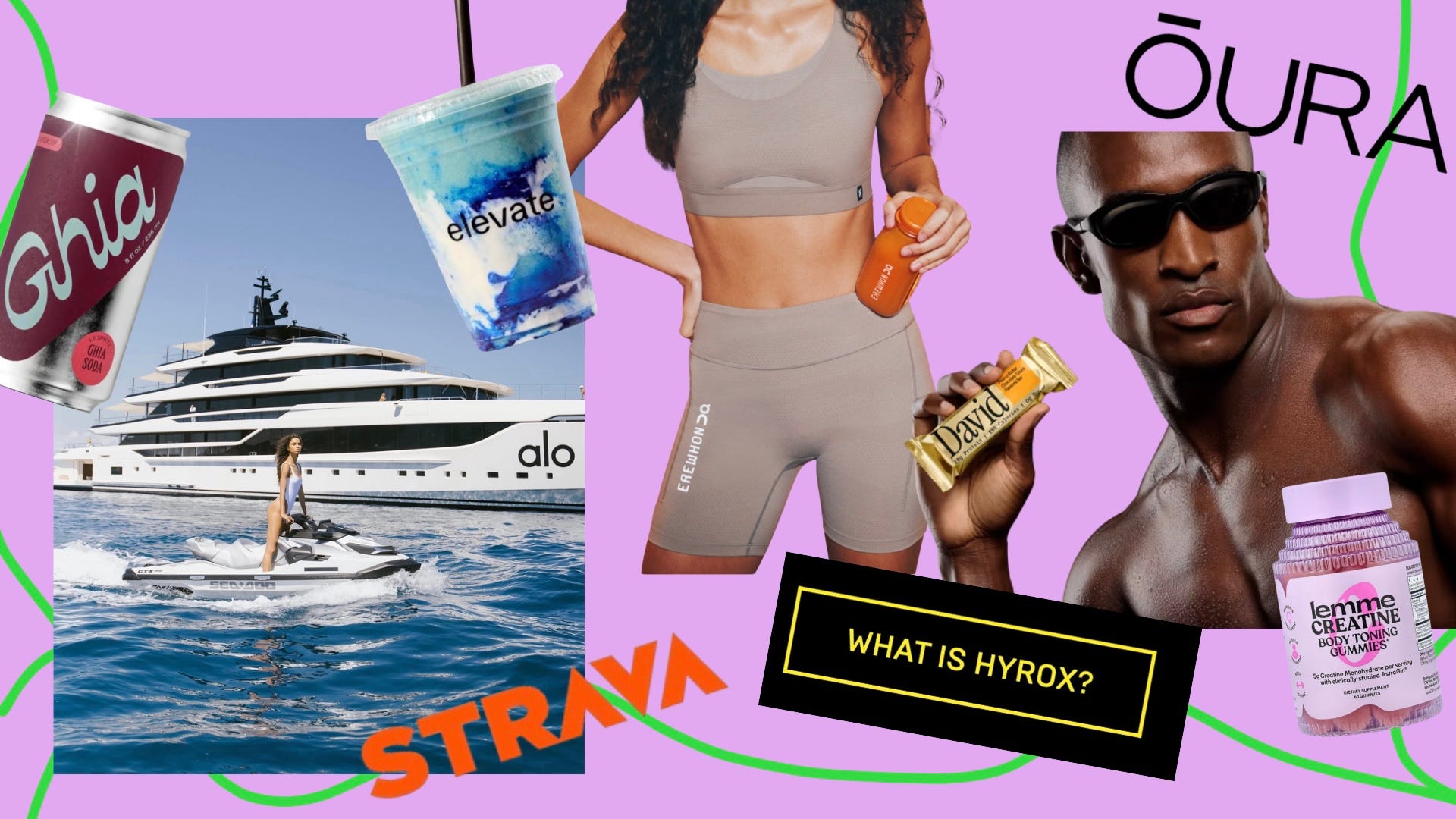
The global wellness industry is currently valued at $6.8 trillion, doubling since 2013, and it’s expected to hit $9.8 trillion by 2029. Fitness and health have transformed modern culture. They’re shaping what we eat, how we live and travel, and what we deem to be aspirational. By turning Ghia into a cult drink-to-know, Maserin turned sobriety into something that was chic, rather than something to be socially shamed by. The brand is now worth $50 million.
The wellness sector has altered our daily habits and our annual goals. We track our steps and our sleep and our personal metrics better than we have ever tracked our finances. For millennials and Gen Z in particular, the pivot has been transformative in what we classify as a life milestone.
The old playbook of societal success for heterosexual couples was marriage, a house, and a baby—plus career progression for men. By the time my mum was my age, she’d had four children and had been married and divorced. At 37, I am single, child-free, and I do not own my own home. By old societal standards, I would be deemed a failure.
Today, we’re having kids later, if at all, and, by 2030, more than 50% of women will be single. This makes single women the next superpower of consumer spend. I wrote about it.
Amid a turbulent world of financial and economic instability, the dating crisis amid the growth of heterofatalism, male loneliness, AI and an increasingly polarised world… ritualising our everyday with wellness can bring a sense of personal peace. You’ve all seen the 15-step morning rituals on TikTok, with vibration plates and red light therapy and an 8-product skincare routine. It takes people two+ hours to get out of the house. And why not? Whatever makes you feel good.
Others are locked into training. Marathons and ultra marathons became a status symbol for the generations locked out of the housing market. Women discover what your body is capable of—and forge a deep bond with it—in a way that isn’t predicated on birthing a child. Men, meanwhile, tend to discover a broader emotional range.
For men and women, chasing a personal best time in any sporting endeavour, from Hyrox to a marathon, has become an achievable goal that you can control. It gives you a moment to celebrate yourself in a world set up for heteronormative ideals. The moment is yours and yours alone; it’s not predicated on meeting or birthing another person. It’s important for single people to have something their families and friends can show up for, and rally behind.
Wellness as commerciality
I am losing count of the volume of wellness launches every week. At times, wellness can feel overwhelming—a cash cow of everything from supplements to snacks and wearables. It has become so inflated an industry, people are finding it harder than ever to filter out what they should be paying attention to. We’re being encouraged to do more, spend more, track more—and if we aren’t, it feels like we are falling short.
This is compounded by the fact that brands within the sector are attracting venture capital money like never before. David Protein has raised $75 million, now comes with a $750 million valuation—within a year of launch. Its forthcoming protein ice cream has been spotted on Bella Hadid’s yacht—the ultimate pre-launch buzz. I genuinely think founder Peter Rahal is one of the smartest and most dynamic entrepreneurs out there right now. For starters, he has turned the humble protein bar into a cult status snack. With roll-outs that include frozen and tinned cod and now ice cream, and genius marketing campaigns, David disrupts by getting people talking. What other protein brand actually drives conversation?
Personally, I think David Protein’s next curveball launch could be a partnership with Betterhelp.
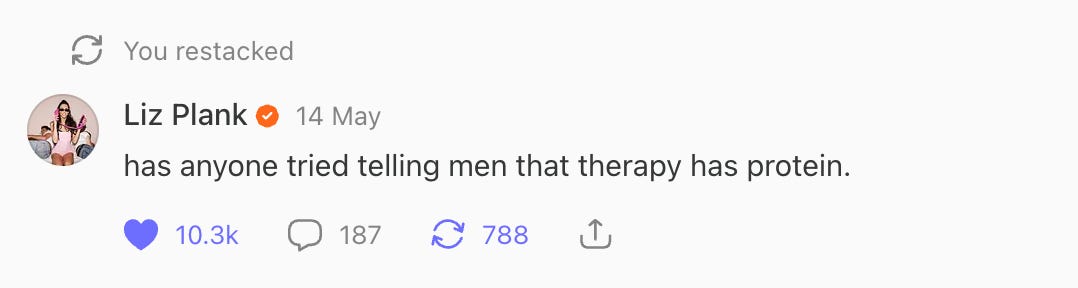
Therapy is the ultimate in wellbeing. Tracking steps and sleep and metrics is just a distraction if we aren’t looking under our own emotional hood to understand what’s going on with ourselves.
Back to brands. This week, Kim Kardashian launched a functional beverage brand, while Kourtney owns Lemme, a supplement gummy brand sold in Erewhon. Also this week, Erewhon partnered with On for a run club and wellness club in LA. I wish they’d co-branded it as ErewhON.
Alo Yoga took to the seas last week, just like Bella Hadid. A 72-metre superyacht was named Alo Voyage, docked in Cannes and was an invite-only wellness club on the ocean. One-up-manship on the showmanship is on the rise in the world of branded activations. Meanwhile, the Bandit Grand Prix was held this weekend in Brooklyn, the same weekend that Hyrox wrapped its blockbuster double weekend in NYC.
These events are helping to carve out what the next iteration of sober socialising looks like; they offer community in real time. This is going to become mainstream as a way of life in the coming years, but there’s a need to keep tabs on the showmanship aspect. After the Satisfy furore, it wouldn’t surprise me if we saw events and launches take a less creative approach moving forwards. Brands will want to play it safe.

Whether in your local gym or held by a brand, community events are important to evolve authentically. None of it is about PR or marketing or Instagram. Here’s why.
Wellness as community
Single people and couples who do not have children still need their version of a village. Millennials are the first generation to have flown the family nest en masse. We live hours and sometimes oceans apart from our parents and the people who have known us for our entire lives.

Being a regular becomes important, from the coffee shop to the gym. We need access to an on-demand community in the same way we might call in to see our parents unannounced.
Human beings were made to interact. Religion is on the decline, and the gym and the run club have become the new church—both are places that answer a need for connection. Social sport is becoming the focal point of community for a lot of people outside work. For freelancers who lack an office or colleagues to chat the minutiae of life with, it’s especially meaningful.
From padel clubs to gyms with social facilities and wellness clubs, third spaces that combine fitness and recovery with areas for leisure are the millennial equivalent to an after-school club. It can be really hard to make friends as adults. Having a job in common does not equate to personal compatibility. People are becoming more discerning about their social circles, and fitness clubhouses offer the chance to forge real friendships through sweat—it’s both a lifestyle, a hobby, and an aligned mindset.
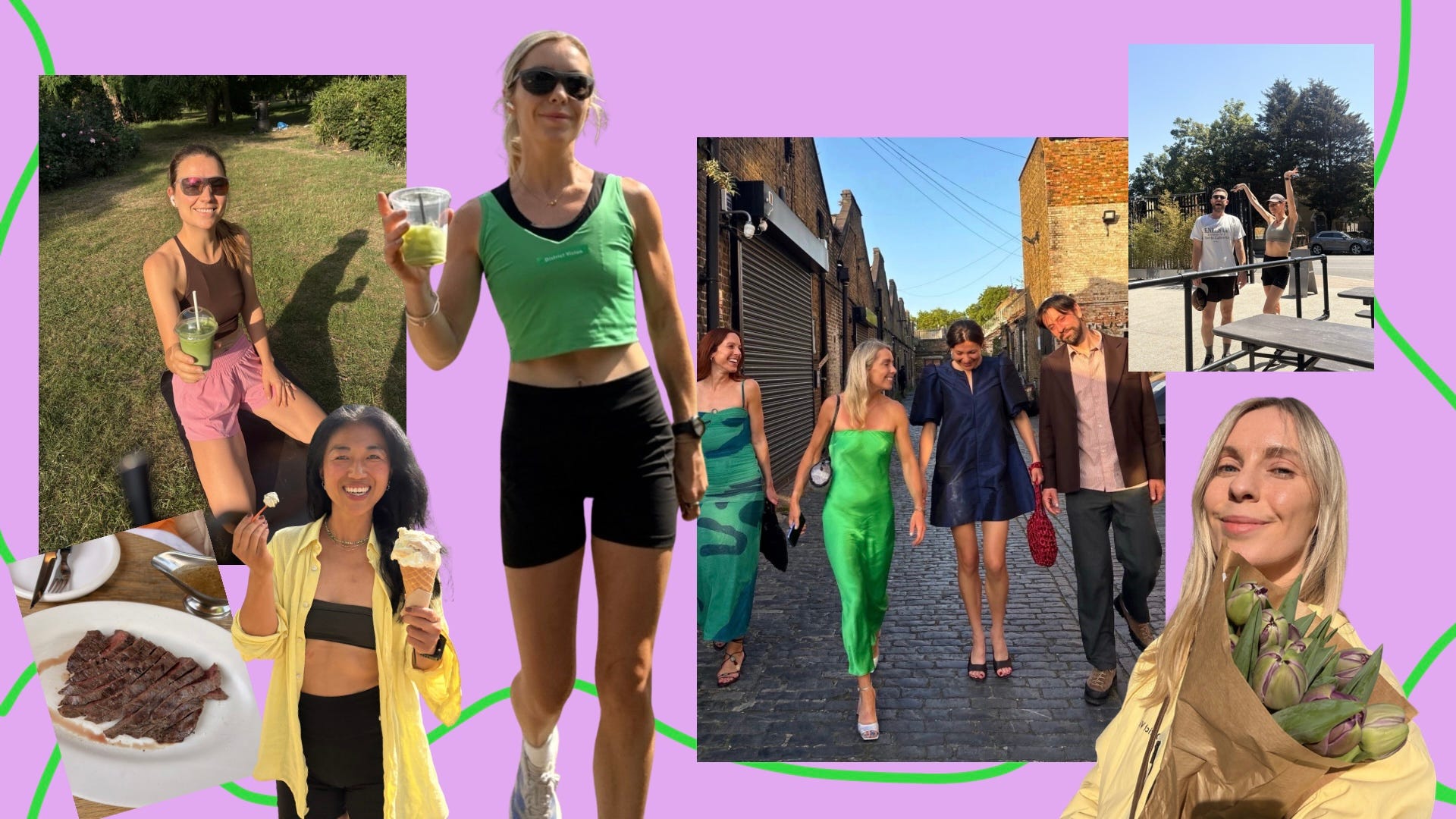
My last week in wellness/the modern-day village. I met everyone through my run club.
Salty POV
Here’s how I see it. The fitness and wellness boom is a response to demographic, economic and social change. It isn’t “replacing” religion, family, community and security. It’s compensating for their absence.
That’s why wellness matters.
The boom is not because red light therapy exists. Not because Erewhon and David sell protein ice cream. Not because every celebrity has a supplements brand. But because the future demands more of us than it did our parents. We are building lives that look fundamentally different to previous generations.
Let’s get into it.
Wellness as longevity
There is so much life left to live.
50 years ago, the average global life expectancy was 60 years old, reaching age 72 in first world countries like the UK. Advancements in medicine mean 40 percent of millennials are going to reach 100+. A century!
Plus, that data doesn’t yet account for the wellness boom, or for those who look after their health. My heart is currently 9 years younger than my actual age. Does that mean I might live until I’m 109? If we are going to live forever, like Oasis suggested, then in order to live well we need to actually be well.
That’s where data from Oura, Whoop et al comes in. That’s why things like the Neko body scans are useful. They can detect everything from heart arrhythmias to blood biomarkers and early signs of cancer. Health systems are on the floor: prevention needs to become as important as cure. Knowledge is power. Data becomes everything when advocating for yourself to doctors.

Wellness isn’t a trend. It’s a way of futureproofing ourselves amid crippled healthcare systems, the rising cost of private health insurance and the inflammatory way our minds and bodies process the everyday stresses of modern life.
In order to live well, we also need to be strong. Frailty is one of the main causes of falls in later life; the inability to squat is among the reasons we wind up needing to go into sheltered housing. It’s lifting weights, not cardio, that will bulletproof our bodies for the next 7+ decades. It’s up to us to build our bodies to cope with the increased demands of life.
Wellness as housing
Millennials are the first generation to be poorer than our parents. Largely, we do not own our own homes. It gets worse with every generation to come.
Right now, children look after their aging parents. But if people do not own their own homes, and are single, and do not have children, being stable and physically able in later life is important because who is going to manage our care? We need a robustness that wasn’t as required for older generations.
I’m convinced that cohabiting and commune-style living is the next era of residential housing. Groups of friends and chosen families living on the same small complex or patch of land. I’m envisaging it as individual apartments or houses with the addition of shared common areas, dining spaces and outdoor areas. Solo living where your closest friends are your neighbours. The modern version of a village. This isn’t a retirement village, but it borrows the ethos and offers it on an intimate scale.
This is also going to be critical for those that do have families, even. The rising cost of childcare is among the reasons many young people are not having children; because we moved away from our families, we don’t have access to grandparents for easy childcare. The village becomes even more important to help share the load.
We’re already starting to see green shoots of this within residential housing—and fitness is playing a big part. Health and movement is transforming hotels and holidays, but it’s also going to transform housing. Gyms like Equinox opened hotels, while fitness-focused hoteliers will develop housing projects. Proof of evolution? Life Time gyms in the US recently launched luxury apartments in Nevada, where sound baths and morning yoga are part of the course. Hotels like Siro (Montenegro), Zel (Spain and the Dominican Republic) and the soon-to-open Zamaya in Mexico already have apartments on-site, offering self-catered accommodation plus extensive workout facilities. Siro even has a nutritionist, which will (I think) become as much a part of the fabric of village life as a doctor in the coming years.

The hospitality offered at fitness-focused hotels is, in my opinion, a blueprint for tomorrow’s village. Communities built around shared movement spaces instead of a pub. A while ago, I wrote about the Salty fitness hotel of the future—if only I could find an investor, and live there forever.
Wellness amid work
Retirement age was 60, then 65. But millennials are not going to retire. Here’s why. Retirement age used to be set around a decade before the average age of death. So by the time millennials are the elder generation, retirement hits roughly at age 90.
But we need to keep on working. If we largely don’t own our own homes, and many of us are self-employed, we lack corporate or final salary pensions. For many self-employed people, we are also the product. I am a writer and consultant, and therefore my writing is a skill I get paid for. It’s important I am well because how am I supposed to write or use my brain to consult if I get alzheimers, or if I get arthritis in my fingers and can no longer type? How do I make money when my income is based on my personal output?
If we are not homeowners, we’re also going to have rent to pay. We’re going to need income into old age.
Creatine is all the rage for muscle builders, but it’s meaningful for everyone. New studies have shown that a double dose of creatine (10g) has positive impacts on cognition. Patients with Alzheimer’s were given 20g a day for eight weeks under supervision—results found their memory and processing speed improved by boosting the brain’s energy metabolism and delaying mental fatigue. Oddly, patients also showed new interest in going to the gym. Creatine cookies suddenly don’t seem like such a bad idea.
The pivot
The days of a one-and-done career are done. Like Emma, many of us will be upskilling and having second and even third waves of our careers. We won’t want to work in the same sector for 70+ years; growth mindset people are going to get bored. (I think the same thing about exercise: it’s always good to add more strings to our bow to keep us energised and our bodies adaptable.)
Plus, AI is changing the market so much, there’s going to be a swing back towards manual, offline work. Career pivots won’t be dramatic and won’t be seen as risky. Going back to study as an adult will become normal. So many millennials feel they don’t have their lives and careers sorted in their 30s and 40s… but we have five decades of work left. Let that sink in for a second. There’s time.
But for all this, we need to be well. We need energy, mental capacity, and physical ability. We need to have as much vitality at 60 as we do at 40. We want to be fit enough to go on holiday at 80 as we are at 60.
Wellness as economic necessity
The birth rate is dropping in every single country in the world. The world is oversubscribed and this is no bad thing; women have more opportunity to build their lives the way they wish in a way that they never have done before. But typical social structures rely on the income of younger generations to subsidise care for the elderly. When today’s babies (part of the population drop-off generation) become the working-age demographic, there isn’t going to be enough taxes raised to subsidise all the old-age millennials.
We are going to have to be self-sufficient. We are going to have to continue to work. We are going to have to make sure we are well.
At the trajectory we are on, within the next 5-10 years, taking peptides will become normal. GLP1s will also become more normal, not to be Hollywood skinny, but for more people to live normal, healthier lives—obesity and the associated health complications put a huge strain on health systems globally. The gym will become normal. Running will become so normal that the entire industry will undergo another transformation—the global community will continue to splinter into different subcultures. Supplements will become as normal as cleaning our teeth. It’s essential that these things happen.
The wellness gap
The industry’s intergalactic rise might feel like an unstoppable dollar-filled freight train, but I think it plays a huge role in getting governments worldwide to take health and fitness care seriously. Lower-income families are already being left out of the wellbeing conversation because being well—and the capacity to think about being well—is an absolute privilege.
It’s important we pay attention to this before yet another inequality gap embeds itself deeply into culture. If wellness culture, driven by affluence, normalises the gym, nutrition, running, socialising, and mental wellbeing, that then eventually becomes a more normalised part of society. That then filters down.
Efforts should be made by business owners today to make it accessible. Everlast in Liverpool and Manchester currently offers Equinox and Third Space-style facilities for £35 a month. This is important. Companies need to act today to broaden the customer demographic. Being well should not be a luxury.
The takeaway
Do I think we need to spend a ton of money on all of the trappings of modern wellness life? Absolutely not. Being well is about understanding your own needs, and building a life and structure that’s centred around nurturing those things. Supplement with what’s required.
But wellness is about futureproofing. And it’s important we invest what we can—whether time, money or energy—to take it seriously.
Many of us (women especially) struggle to prioritising routines and rituals because looking after ourselves feels selfish: this is especially true for the boomer generation. My mum barely ever sits down. But taking care of ourselves is actually selfless, because it will allow us greater autonomy in years to come. It allows us to show up for ourselves and others.
As always, we need to start with the basics. Get offline. Sleep the right amount. My Oura tells me how many hours my body personally needs (7 hours), which is helpful for me in avoiding berating myself for never getting the “required” eight. Eat your proteins and your fibres and good, whole food. See your friends. Have a laugh. Find connection. Read novels for empathy development (men especially). Sit in the sun. Move your body. Strength train. Take creatine. Drink water, preferably with electrolytes or added sea salt. Stay salty.
90-year-old you will thank you for it.
So many points we could dive deeper over a protein shake from this piece Grace.
2 that stood out: 1. the urgent need for wellness communities to be established at scale. Did you read about the North London community in The Times last month? Established about 20 years ago and only 1 person has ever left because its so great! Waitlist only. All the Blue Zone locations have daily community and social interaction to support each other.
2. The reassuringly alarming fact that I have another 40-50 years of work left to do gives me time to breathe and removes some pressure to launch my first business (Reps Athletic Beauty). Personally I can't bear the thought of full retirement, my Uncle Nick is 86 and still drives into the office today to oversee the business he built over the past 50+ years, he's still active and sharp as a knife; I genuinely believe continuing to work in some form is a vital longevity tool.
Great piece, have a fab Sunday!
Unrelated to this post but I spied a Salty flier on a lamppost in London Fields on my dog walk this morning !!